
Skip to content
The Frequenter

Dreams 101: What your dreams actually mean

Every night, your mind builds a world, casts its characters, and forgets almost everything by morning. Here is what science knows about dreams, and what it still cannot explain.

By The Frequenter19 September 20264 min read

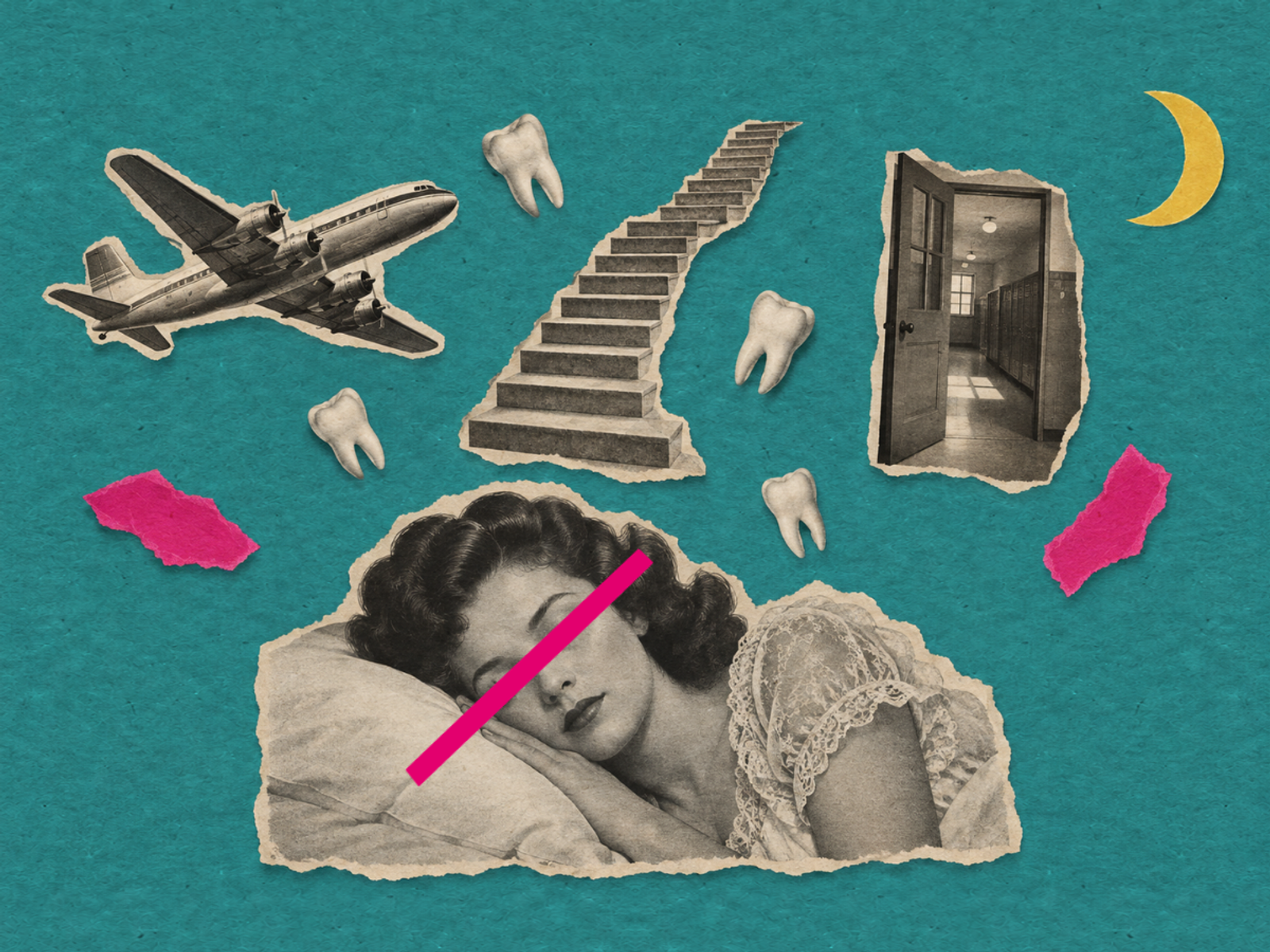
Last night, you may have missed a flight, returned to high school, or wandered the streets of a city you’ve never been to, all within your dream.

Dreams can feel like messages, memories, or complete nonsense. Humans have spent thousands of years attempting to determine how to interpret them. So, how can you decipher what they really mean?

What is a dream?

A dream is a sequence of thoughts, images, sensations, and emotions experienced during sleep. Dreaming can occur during multiple stages of sleep, but the most vivid and narrative dreams are often associated with rapid eye movement, or REM, sleep. During REM, brain activity increases, the eyes move beneath their lids, and most voluntary muscles become temporarily immobilized.

A dream can borrow from recent experiences, distant memories, unresolved feelings, imaginary scenarios, and details you barely noticed while awake.

A brief history of dream science

Long before dreams became mundane, they were associated with gods, healers, and prophets. Ancient Egyptian and Mesopotamian cultures recorded dreams as possible divine messages. Greek dream temples invited visitors to sleep in sacred spaces in hopes of receiving guidance or healing. Dream interpretation also developed across Indian, Chinese, Islamic, Jewish, and other intellectual and spiritual traditions.

By the late nineteenth century, dreams had become a subject of modern psychology. Sigmund Freud argued that dreams disguised unconscious wishes. Carl Jung viewed them as communications from the unconscious expressed through personal and shared symbols.

Dream research became more measurable in 1953, when researchers Eugene Aserinsky and Nathaniel Kleitman identified REM sleep. Scientists could now observe physical changes associated with dreaming and wake participants at specific stages to collect reports.

“The dream must survive the transition into waking life, and the dreamer must translate a strange internal experience into language.”

How do we study dreams today?

Since researchers cannot watch a dream directly, they study its surrounding evidence. Participants may sleep in laboratories while machines track brain waves, eye movements, breathing, heart rate, and muscle activity. Researchers then wake them during particular sleep stages and ask what they were experiencing.

Dream journals and questionnaires allow scientists to examine recurring themes over time. Brain imaging can also show which regions are more or less active during sleep, although it cannot produce a perfect recording of a dream. This creates an obvious complication: dream science depends heavily on memory. The dream must survive the transition into waking life, and the dreamer must translate a strange internal experience into language. We are not studying the dream exactly as it happened. We are studying our perception of it.

What is dream interpretation?

Dream interpretation is the practice of exploring the possible meaning of a dream’s images, emotions, and narrative. Some approaches treat dreams as expressions of unconscious conflicts or desires. Others consider them a form of emotional processing, memory organization, or mental simulation. Spiritual traditions may understand certain dreams as intuitive, symbolic, or prophetic.

There is no scientifically verified dream dictionary in which one symbol always equals one meaning. A snake could represent danger to one person, transformation to another, and absolutely nothing beyond the documentary they watched before bed.

The dreamer’s associations matter more than a universal definition. Instead of asking, “What does water mean?” it may be more useful to ask, “What does water mean to me, and how did I feel when I saw it?”

Common dreams and their possible meanings

These interpretations are starting points.

  • Teeth falling out: May reflect anxiety, vulnerability, embarrassment, concerns about appearance, or a loss of control.
  • Being chased: Can suggest avoidance, pressure, or a waking problem that feels difficult to confront.
  • Falling: May accompany feelings of instability, uncertainty, or losing control. Sometimes it is simply part of the body’s transition into sleep.
  • Being naked in public: Often relates to exposure, embarrassment, judgment, or fear of being seen before you feel prepared.
  • Missing a train, flight, or deadline: May reflect anxiety about timing, missed opportunities, or falling behind.
  • Returning to school: Can appear during periods of evaluation or self-doubt, particularly when you feel tested in waking life.
  • Discovering a hidden room: May suggest unexplored possibilities, neglected memories, or a changing sense of self.
  • Dreaming about an ex: May represent a past version of you, an emotional pattern, or something your mind has not fully resolved yet.

Why do we dream?

Science does not yet have one complete answer. Dreaming may help the brain consolidate memories, process emotion, rehearse possible threats, and form unexpected connections between ideas. Dreams may also be a side effect of the brain remaining active while sensory input and conscious control are reduced.

Their benefits may include emotional processing, creative problem-solving, memory integration, and the opportunity to recognize concerns that are easier to ignore while awake. Even when a dream has no hidden message, reflecting on it can reveal what currently holds your attention.

Dreams may not predict the future. But, they also may. Who are we to say? We can say for sure, however, that they definitely give us a peek into our subconscious. Instead of focusing on whether every dream means something, evaluate what the dream made you feel and go from there.

End of entry TF-101-006

Further reading

  1. How did a spiritual holiday turn into pop-culture?

    Before the costumes and candy, Halloween was shaped by seasonal rituals, saints, spirits and the dead.

    29 October 2026 · 8 min

    THIS WEEK'S RABBIT HOLE
  2. Can two people have the same dream?

    Mutual dreaming, dream telepathy and the possibility of meeting someone beyond the waking world.

    22 October 2026 · 4 min

    THIS WEEK'S RABBIT HOLE
  3. “I Dreamed My Teeth Were Falling Out. Help.”

    What your subconscious might be trying to tell you when your teeth start falling out in your dreams.

    16 October 2026 · 2 min

    ARE YOU GONNA MATCH OUR FREQ?