
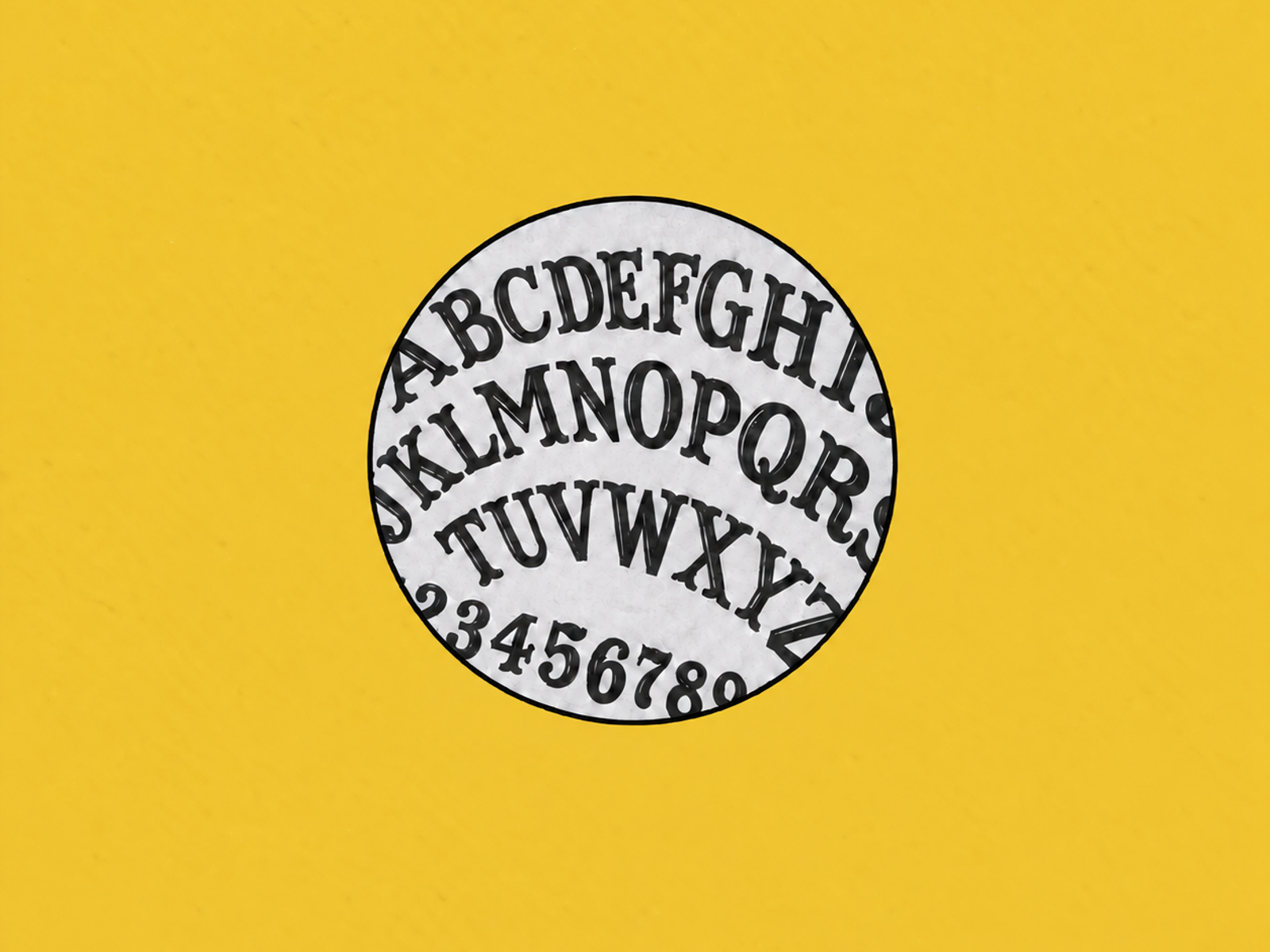
Today, the Ouija board sits in a strange cultural category. It is manufactured by a major toy company but treated by many people as an occult object. It belongs to sleepovers and séances, plastic game aisles and paranormal warnings. Ask whether it is a toy and the box says yes. Ask whether it is dangerous and horror movies have spent decades answering for it.
So how did a board game become an occult tool? The short answer is that it did not. Not exactly.
Before Ouija, the dead were already talking
The Ouija board first emerged in the United States during the nineteenth-century Modern Spiritualist movement, when communication with the dead became a popular form of belief, entertainment, and experimentation. Mediums delivered messages through knocks, table movements, automatic writing, and other techniques that claimed to offer evidence that consciousness continued after death.
There was, however, a logistical problem. A sequence of knocks had to be translated letter by letter. Automatic writing could be difficult to read. Talking boards offered a more efficient interface. Put the alphabet in front of a group, add a movable indicator, and let the message spell itself.
By the 1880s, versions of these boards were already circulating among Spiritualists. The Ouija board did not invent the desire to speak with the dead. It simply gave that desire a clean layout, a memorable name, and a business model.
The ghost in the patent office
In 1890, the Kennard Novelty Company began producing its version of a talking board in Baltimore. Elijah Bond filed the patent, which described the invention as a “toy or game.” The design included letters, numbers, and a small table-like pointer operated by the users’ hands.
Even the name arrived with a story attached. According to the company’s own account, Bond’s sister-in-law Helen Peters, a medium and early investor, asked the board what it wanted to be called. The planchette allegedly spelled O-U-I-J-A, then explained that the word meant “good luck.”
The board received U.S. Patent No. 446,054 in 1891. The patent does not claim that spirits move the pointer. The patent states, “The operation is as follows: The table is placed upon the board, and the hand of the Operator is lightly laid or held on the table, when in a few moments the table will move and point to certain letters on the board, spelling and forming sentences, answering questions put by the operator or any other person that may be present at the time.” That gap between action and intrigue became the product.
“The Ouija board gave the desire to speak with the dead clear instructions and a business model.”
An oracle in your living room
Under businessman William Fuld, Ouija became a commercial success. It was not initially marketed as a one-way ticket to the other-side. It was a “mystifying oracle,” a parlor amusement that might answer questions about love, money, marriage, or the future.